Communities of Practice
This 12-month Community of Practice pilot provides a forum for learning, discussion and the forming professional communities that underpin best practice and promote connection among APOs across Victoria.
Sessions are led by APOs, for APOs. Meet the APO Leads.
The Community of Practice program complements the APO e-Manual as one part of a broader professional-development program funded by the Victorian Senior Practitioner’s Office to support the Victorian APO workforce.
The Communities of Practice meetings combine State-wide (all-APO) and Regional meetings in different formats between July 2026 and June 2027.
Community of Practice sessions
Register now for the 2026-27 Community of Practice sessions.
The program includes a mix of all-APO sessions and regional sessions. The regional sessions cover the same topics, so register for one that is closest to your location or that best suits your schedule.
Community of Practice case study
APOs need to be able to spot a variety of issues in behaviour support plans, upholding the person's rights, enforcing legislation, checking compliance and improving quality of life.
Our practical regional CoP sessions will focus on a fictional behaviour support plan, prepared for Mickey Mouse.
Mickey's behaviour support plan has been drafted as a case study APOs can use throughout the CoP sessions to underpin breakout-room discussions. APOs will work together and problem solve key aspects of Mickey's plan.
Key questions will be shared with registered attendees ahead of each regional session, allowing APOs to prepare for the conversation.
Come ready to share ideas, offer feedback and collaborate on practical ways to improve this non-compliant behaviour support plan!
Download Mickey's behaviour support plan case study (downloads Word doc).
Defining & demystifying the APO role
12pm - 1pm Tuesday, 19 August - Register now
This session welcomes APOs across Victoria to the 12-month Communities of Practice pilot.
Your APO Leads will introduce new resources in the APOs Vic e-Manual to help you make sense of the APO role and where it sits within the overarching behavior support process (including know who does what... and when!).
They will also orientate you to the coming 12 months of Communities of Practice, setting the scene for program that builds your confidence, strengths your knowledge and expands your networks with APOs in your region.
What makes a quality behaviour support plan?
Identifying and implementing quality behaviour support plans is a core part of the APO role.
Each regional session focuses on group-based discussion, using the same case study.
APOs will work together to unpack key elements of quality behaviour support plans, including: seeing the person in the plan, improving quality of life, compliance, spotting 'hidden' restraints included in the plan and red flags, using accessible language, and who to contact when you have questions or concerns. This session explores the collaborative relationship between and distinct roles of APOs and Behaviour Support Practitioners.
Prepare using Mickey's fictional behaviour support plan (links to information and downloadable case study).
North-West Inner (Metro)
11am - 12.20pm Tuesday, 20 October - Register now
North-West Outer
1pm - 2.20pm Tuesday, 20 October - Register now
South-East Inner (Metro)
11am - 12.20pm Wednesday, 21 October - Register now
South-East Outer
1pm - 2.20pm Wednesday, 21 October - Register now
What is the least restrictive option?
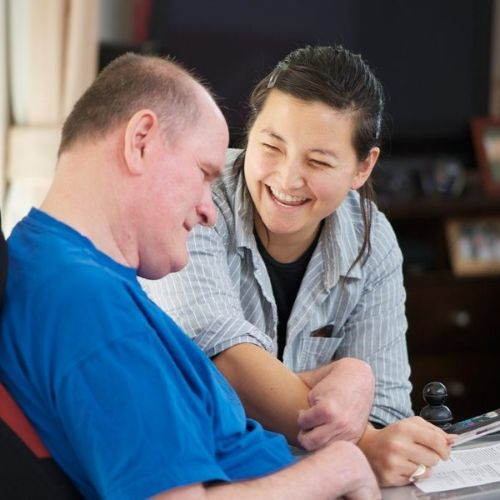
In this session, we’ll share through group discussions our experiences of exploring least restrictive options, and together we'll navigate the complexities that arise in daily practice.
This session centres the importance of improving the person’s quality of life and upholding their human rights, as well as adhering to governing legislation.
We also discuss:
- making data-driven decisions and how to gather the information to make good decisions;
- identifying restrictive practices that aren’t listed as restraints in the plan;
- strategies for reducing restrictive practices;
- requesting support from allied health team members and specialists; and
- including fade-out strategies and timeframes in every plan.
Prepare using Mickey's fictional behaviour support plan (links to information and downloadable case study).
North-West Inner (Metro)
11am - 12.20pm Tuesday, 16 February - Register now
North-West Outer
1pm - 2.20pm Tuesday, 16 February - Register now
South-East Inner (Metro)
11am - 12.20pm Wednesday, 17 February - Register now
South-East Outer
1pm - 2.20pm Wednesday, 17 February - Register now
Working with others: Communicating with key APO stakeholders
This session focuses on communicating effectively with people from different professions that are central to APO work.
Structured as a panel Q&A, APO's can strengthen their understanding of different contexts and how best to connect with (and influence) professionals with diverse areas of expertise.
Panel members and professions will be confirmed closer to the date. Submit questions via the registration link to shape the panel discussion.
12pm - 1pm Wednesday, 21 April - Register now
Implementing restrictive practices and fade-out plans
Moving from planning to implementing restrictive practices presents challenges, many of which can only be learned on the job.
This discussion-based session focuses on sharing learning about the practicalities of implementing restrictive practices.
APOs will also discuss strategic and achievable fade-out plans, including appropriate evidence and – building on April’s session – influencing change across stakeholder groups.
This session will review and wrap up the 12-month program to strengthen APOs’ ability and confidence with realistic, meaningful reduction and elimination of restrictive practice, across a variety of situations.
Prepare using Mickey's fictional behaviour support plan (links to information and downloadable case study).
North-West Inner (Metro)
11am - 12.20pm Tuesday, 15 June - Register now
North-West Outer
1pm - 2.20pm Tuesday, 15 June - Register now
South-East Inner (Metro)
11am - 12.20pm Wednesday, 16 June - Register now
South-East Outer
1pm - 2.20pm Wednesday, 16 June - Register now

What is the difference between all-APO and regional sessions?
The all-APO sessions include presentations and guest speakers. They focus on information that will inform discussion in the regional sessions.
Regional sessions are discussion-based and build on the information presented at the all-APO sessions. However, please attend even if you couldn't make the all-APO session!
These sessions focus on talking through key issues to problem-solving collaboratively.
Regional sessions repeat topics, enabling smaller groups than all-APO sessions. While meeting other APOs in your area is a key benefit and you are encouraged to attend the region that best relates to your main work location(s), you can also choose to register for the session that best suits your schedule.
By registering, you will receive session reminders, Zoom details and key questions to inform discussion (for regional sessions).
Meet your APO Leads
The APO Leads hold a leadership role for APOs around Victoria, planning and facilitating the Communities of Practice sessions, working closely with the team from the University of Melbourne.
They are central in building, developing and delivering this one-year pilot program and connect with the Victorian Senior Practitioner's Office to support APOs development through this initiative.
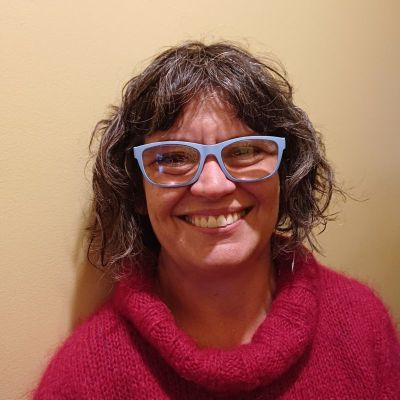
Andi McQueen (APO Lead, North-West Inner)
National Manager: Specialist Services, Able Australia
I have worked alongside people with multiple and complex disabilities as a speech pathologist for many years.
I see all behaviour as communication, and is passionate about listening, responding with respect, and safely reducing the use of restrictive practices.
Through this Community of Practice, I am looking forward to meeting other APOs and learning from each other.
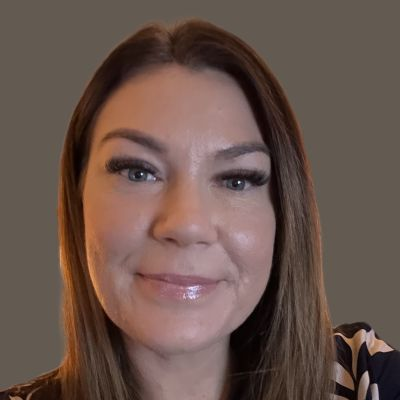
Sarah Frost (APO Lead, North-West Outer)
Authorised Program Officer (APO) Coordinator, Aruma
As an APO with almost 6 years’ experience, I am passionate about translating legislation into practical, person-centred outcomes.
I am excited to lead conversations that encourage collaboration, challenge thinking, and share real-world strategies that strengthen practice and improve the lives of people with disability.

Bernardo Bamberg (APO Lead, South-East Inner)
Coordinator, Quality, InLife Independent Living
Over the past five years I have supported our organisation in behaviour support planning, restrictive practices and ethical decision making to ensure the highest quality of care to our clients.
I have a diverse background, a person-centred approach and also contributed to the APO e-Manual under The University of Melbourne’s guidance.
I look forward to facilitating opportunities for APOs across Victoria to learn, connect and navigate the behaviour-support complexities with confidence.

Sian Dingley (APO Lead, South-East Outer)
Authorised Program Officer, Villa Maria Catholic Homes (VMCH)
I have over 13 years’ nursing experience, which led to my role as an Authorised Program Officer (APO).
For the past five years, I have combined clinical knowledge with
person-centred NDIS support, focusing on human rights, reducing restraint, and building client skills.
I work across multiple settings and look forward to contributing to and learning from this Community of Practice.
APO Victoria Professional Development Program Evaluation
Find out more about the professional-development evaluation conducted by the University of Melbourne, what information is collected, how the information will be used, how to opt out and who to contact for more details.
Questions? Contact apo-vic@unimelb.edu.au

This project is supported by the Victorian Government and delivered by the University of Melbourne.