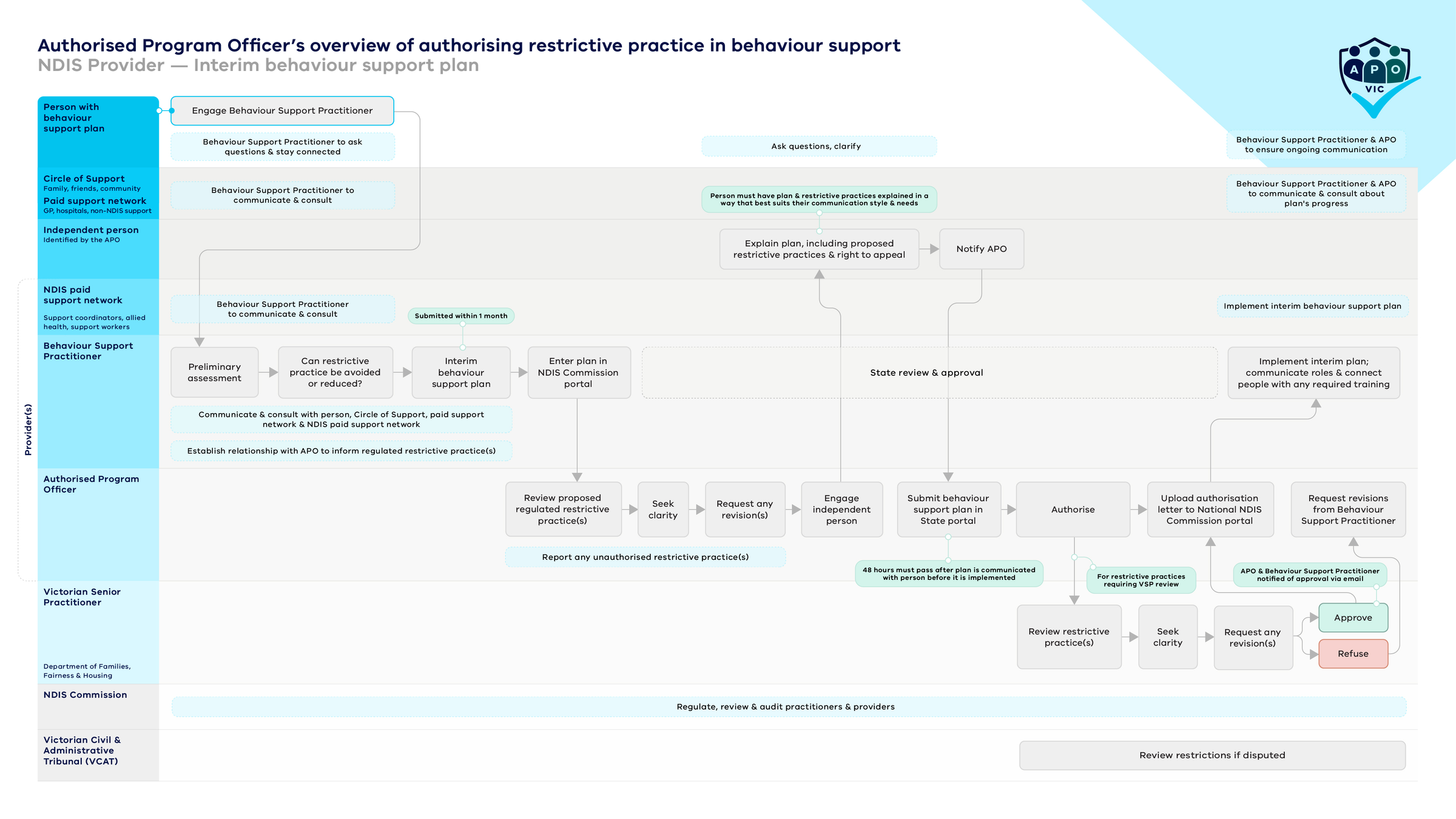
Step 2: Interim behaviour support plan
NDIS providers
This map shows the process for Authorised Program Officers (APOs) authorising restrictive practice(s) for interim behaviour support plans funded for NDIS providers. Print this process (opens printable image).
Step-by-step description
The tables below describe the steps involved in authorising restrictive practice(s) for interim behaviour support plans funded for NDIS providers. Print this process (opens printable image).
All restrictive practices
| Person responsible | Step |
| Person with disability | Access the NDIS Quality and Safeguards behaviour support database for participants. |
| Behaviour Support Practitioner | This includes assessing whether restrictive practice can be avoided (ensuring it is the last resort for preventing the person with disability from causing physical (or emotional) harm to themselves or another person). If it cannot be avoided, the proposed restrictive practice must be the least restrictive practice possible in the circumstances and meet all governing legislation, policies and rules. Access more NDIS Quality and Safeguards information about developing behaviour support plans. Establish relationship with APO regarding proposed regulated restrictive practice. |
| Behaviour Support Practitioner |
Download an interim behaviour support template from the NDIS website. Refer also to the NDIS interim behaviour support plan checklist. The Department’s behaviour support toolkit also includes a template you may wish to use. Find out more about developing behaviour support plans from the NDIS Quality and Safeguards website. |
Enact the interim behaviour support plan in the NDIS Quality and Safeguards Commission portal. Lodge the behaviour support plan into the State-based Restrictive Intervention Data System (RIDS). | |
| Authorised Program Officer | Check they meet all governing legislation, policies and rules, meet the person’s goals and work to improve the person’s quality of life. Report any unauthorised restrictive practices identified or suspected. |
| Authorised Program Officer | |
| Request any revision(s) to the behaviour support plan if necessary to meet all governing legislation, policies and rules and ensure the person’s quality of life is enhanced. | |
Source and engage an independent person. Understand who qualifies as an independent person and their role in the regulated restrictive practice authorisation process. | |
Explain the behaviour support plan, proposed regulated restrictive practices, how they will be used and the person’s right to appeal any use of a regulated restrictive practice. The independent person must make all reasonable efforts to explain the regulated restrictive practices in the behaviour support plan in a way suited to the person with disability’s communication style and needs. Find out more about the independent person’s role. | |
| Authorise or refuse proposed regulated restrictive practices in the State-based Restrictive Intervention Data System (RIDS). |
Victorian Senior Practitioner approval (where required)
Victorian Senior Practitioner approval is required for any proposed use of seclusion, physical or mechanical restraint, and all restrictive practices proposed for people with psychosocial disability.
| Person responsible | Step |
Review the proposed restrictive practice(s). Check they meet all governing legislation, policies and rules , policies and rules], that they meet the person’s goals and work to improve the person’s quality of life. | |
| Seek clarity about the support plan or its suitability, if required. | |
| Request any revision(s) to the behaviour support plan if necessary to meet all governing legislation, policies and rules and ensure the person’s quality of life is enhanced by the plan. | |
Approve or refuse proposed regulated restrictive practices in State-based Restrictive Intervention Data System (RIDS). The APO will be notified of approval in State-based Restrictive Intervention Data System (RIDS). |
All restrictive practices
| Person responsible | Step |
If refused: | Behaviour Support Practitioner will be notified in the State-based Restrictive Intervention Data System (RIDS), with feedback including the request to revise the proposed restrictive practice(s) in the behaviour support plan and why. |
If approved: | Upload the authorisation letter from the State-based Restrictive Intervention Data System (RIDS) into the NDIS-based provider portal. The Behaviour Support Practitioner receives notified of approval in the State-based Restrictive Intervention Data System (RIDS) and via email. |
Implement interim plan. Contact all people with roles in the behaviour support plan and communicate their roles, ensure they have the skills to safely support the plan and connect them with any training, as required. Continue to check in with the people involved with the plan informally to understand issues and celebrate successes. This will also inform any revisions the support plan may need, if required. Find out more about working with Behaviour Support Practitioners as an APO. | |
| Ongoing regulating, reviewing and auditing of providers and practices. | |
Review restrictive practices, if use or decision is disputed. |
Printable image